Cervical Spine
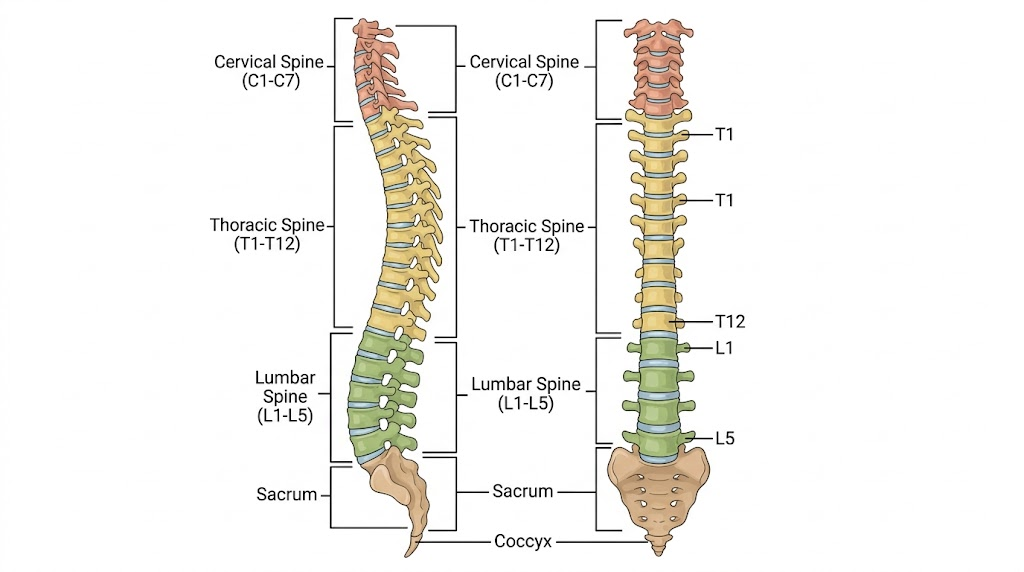
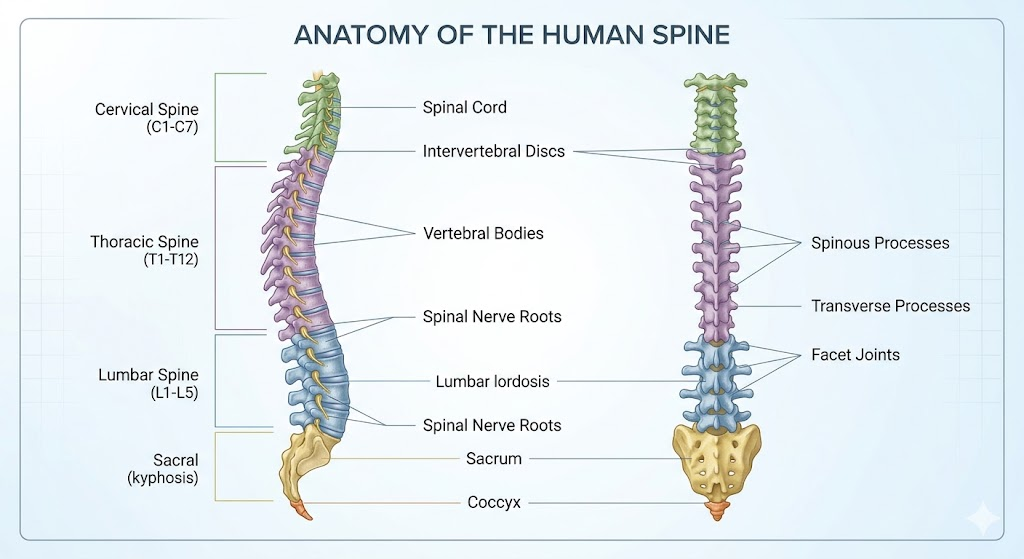
The cervical spine is the uppermost part of the spinal column located in the neck region. It consists of seven vertebrae, labeled C1 to C7, which support the head, protect the spinal cord, and allow a wide range of neck movements such as bending, turning, and rotation. The cervical spine is highly flexible and plays a crucial role in maintaining posture, balance, and communication between the brain and the rest of the body through spinal nerves.
Anterior Cervical Discectomy & Fusion (ACDF)
Anterior Cervical Discectomy and Fusion (ACDF) is a common and highly effective spine surgery performed to relieve pressure on the spinal cord or nerve roots in the cervical spine (neck region). The procedure involves removing a damaged or herniated cervical disc and stabilizing the spine using a bone graft or implant.
ACDF is widely used to treat neck pain, arm pain, numbness, weakness, and other symptoms caused by nerve compression in the cervical spine.
Cervical Corpectomy & Reconstruction
Cervical corpectomy and reconstruction is an advanced spine surgery performed to remove damaged vertebral bone and spinal discs in the cervical spine (neck region) to relieve pressure on the spinal cord and nerves. After removing the affected structures, the spine is reconstructed and stabilized using bone grafts, cages, plates, or screws.
This procedure is commonly used for severe spinal cord compression, cervical myelopathy, trauma, tumors, infections, or complex degenerative spine conditions.
Posterior Cervical Decompression & Fixation
Posterior cervical decompression and fixation is a specialized spine surgery performed to relieve pressure on the spinal cord and nerves in the cervical spine through the back (posterior) part of the neck. The procedure also stabilizes the spine using screws, rods, or other fixation devices to maintain proper spinal alignment and strength.
This surgery is commonly recommended for patients with severe cervical spinal cord compression, instability, trauma, tumors, deformities, or degenerative spine diseases.
Thoracic Spine
The thoracic spine is the middle section of the spinal column located between the cervical spine (neck) and lumbar spine (lower back). It consists of 12 vertebrae labeled T1 to T12 and is attached to the rib cage, providing stability and protection to vital organs such as the heart and lungs.
Compared to other parts of the spine, the thoracic spine is more stable and less flexible because of its connection to the ribs. It plays an important role in posture, body support, and spinal protection.
Thoracic Fixation
Thoracic fixation is a spinal stabilization procedure performed to support and stabilize the thoracic spine using screws, rods, plates, or other spinal implants. The surgery is commonly performed to treat spinal instability, fractures, deformities, tumors, infections, or degenerative conditions affecting the thoracic region of the spine.
The thoracic spine includes 12 vertebrae (T1–T12) located in the upper and middle back. Thoracic fixation helps restore spinal alignment, protect the spinal cord, reduce pain, and improve stability and mobility.
Thoracic Decompression
Thoracic decompression is a spine surgery performed to relieve pressure on the spinal cord or nerves in the thoracic spine, which is the middle portion of the spine located between the neck and lower back. Compression in this area can cause pain, weakness, numbness, balance problems, and serious neurological complications if left untreated.
The goal of thoracic decompression surgery is to create more space around the spinal cord and nerves, restore normal nerve function, and reduce symptoms caused by spinal compression.
Lumbar Spine
The lumbar spine is the lower portion of the spinal column located between the thoracic spine and the sacrum. It consists of five large vertebrae labeled L1 to L5 and is responsible for supporting most of the body’s weight while allowing flexibility and movement.
The lumbar spine plays a major role in standing, walking, bending, lifting, and maintaining posture. Because it bears significant mechanical stress, the lumbar spine is one of the most common areas affected by back pain and spinal disorders.
Lumbar discectomy
Lumbar discectomy is a surgical procedure performed to remove a damaged or herniated disc in the lower back (lumbar spine) that is pressing on spinal nerves. The surgery is commonly recommended for patients with severe lower back pain, sciatica, leg pain, numbness, or weakness that does not improve with conservative treatment.
The primary goal of lumbar discectomy is to relieve nerve compression, reduce pain, and restore normal movement and function.
Laminectomy & decompression
Laminectomy and decompression surgery is a spinal procedure performed to relieve pressure on the spinal cord or nerves caused by narrowing of the spinal canal, herniated discs, bone spurs, or other spinal conditions. The surgery creates more space within the spinal canal, helping reduce pain, numbness, weakness, and other neurological symptoms
This procedure is commonly performed in the cervical, thoracic, or lumbar spine depending on the location of nerve compression.
TLIF (Transforaminal Lumbar Interbody Fusion)
Transforaminal Lumbar Interbody Fusion (TLIF) is an advanced spinal fusion surgery performed to stabilize the lumbar spine and relieve nerve compression caused by degenerative spine conditions. The procedure involves removing a damaged disc and fusing two or more vertebrae together using bone grafts, cages, screws, and rods.
TLIF is commonly used to treat chronic lower back pain, spinal instability, nerve compression, and deformities affecting the lumbar spine.
Minimally Invasive Spine Surgery (MIS)
Minimally Invasive Spine Surgery (MIS) is an advanced surgical technique used to treat various spine disorders through small incisions with minimal damage to surrounding muscles and tissues. Unlike traditional open spine surgery, MIS uses specialized instruments, microscopes, endoscopes, and image-guided technology to perform precise spinal procedures with faster recovery and less postoperative pain.
MIS can be performed in the cervical, thoracic, and lumbar spine to treat conditions affecting the spinal cord, nerves, discs, and vertebrae.
Tubular Microdiscectomy
Tubular microdiscectomy is a minimally invasive spine surgery performed to remove a herniated or slipped disc that is compressing a spinal nerve. The procedure uses a small tubular retractor system and microsurgical techniques to access the spine through a tiny incision while minimizing damage to surrounding muscles and tissues.
This advanced procedure is commonly used to treat lumbar disc herniation and sciatica, helping relieve pain, numbness, and weakness in the legs.
MIS Decompression
Minimally Invasive Spine (MIS) decompression is an advanced surgical procedure used to relieve pressure on the spinal cord or nerves through small incisions and muscle-sparing techniques. The procedure is commonly performed to treat spinal stenosis, herniated discs, and nerve compression causing pain, numbness, weakness, and mobility problems.
Unlike traditional open spine surgery, MIS decompression uses specialized instruments, tubular retractors, microscopes, or endoscopes to access the spine with minimal disruption to surrounding tissues.
MIS TLIF with Percutaneous Pedicle Screws
Minimally Invasive Transforaminal Lumbar Interbody Fusion (MIS TLIF) with percutaneous pedicle screws is an advanced spine surgery performed to stabilize the lumbar spine and relieve nerve compression using small incisions and muscle-sparing techniques. The procedure combines spinal fusion with minimally invasive screw placement to reduce tissue damage, pain, and recovery time.
This surgery is commonly used to treat degenerative lumbar spine conditions, instability, slipped vertebrae, and chronic lower back pain.
Spinal Tumours
Spinal tumours are abnormal growths that develop within or around the spine and spinal cord. These tumours can occur in the vertebrae, spinal cord, nerve roots, or surrounding tissues. Spinal tumours may be benign (non-cancerous) or malignant (cancerous), and they can affect spinal stability, nerve function, and overall neurological health.
Intradural & extradural tumour excision
Intradural and extradural tumour excision is a specialized spine surgery performed to remove tumors located inside or outside the protective covering of the spinal cord. These tumors can compress the spinal cord, nerves, and surrounding structures, causing pain, weakness, numbness, and neurological deficits.
The primary goal of surgery is to safely remove the tumor, relieve pressure on the spinal cord and nerves, preserve neurological function, and restore spinal stability when necessary.
Intramedullary tumour surgery
Intramedullary tumour surgery is a highly specialized neurosurgical procedure performed to remove tumors located within the spinal cord itself. These tumors arise from the cells inside the spinal cord and can interfere with nerve function, spinal cord pathways, and body movement if left untreated.
The primary goal of surgery is to safely remove as much of the tumor as possible while preserving neurological function and relieving pressure on the spinal cord.
Vertebral Augmentation
Vertebral augmentation is a minimally invasive spinal procedure used to treat painful vertebral compression fractures and weakened spinal bones. The procedure helps stabilize fractured vertebrae, reduce pain, restore spinal strength, and improve mobility and quality of life.
It is commonly performed for fractures caused by osteoporosis, spinal tumors, trauma, or weakened vertebral bones.
Kyphoplasty
Kyphoplasty is a minimally invasive spine procedure used to treat painful vertebral compression fractures caused by osteoporosis, trauma, spinal tumors, or weakened bones. The procedure helps stabilize fractured vertebrae, relieve pain, restore spinal height, and improve mobility and posture.
Kyphoplasty is commonly performed in the thoracic and lumbar spine and is considered an effective treatment for patients suffering from severe back pain due to spinal fractures.
Vertebroplasty
Vertebroplasty is a minimally invasive spinal procedure used to treat painful vertebral compression fractures caused by osteoporosis, trauma, spinal tumors, or weakened bones. The procedure involves injecting special medical bone cement into a fractured vertebra to stabilize the bone, relieve pain, and improve mobility.
Vertebroplasty is commonly performed in the thoracic and lumbar spine and is an effective treatment for patients suffering from severe back pain due to spinal fractures.